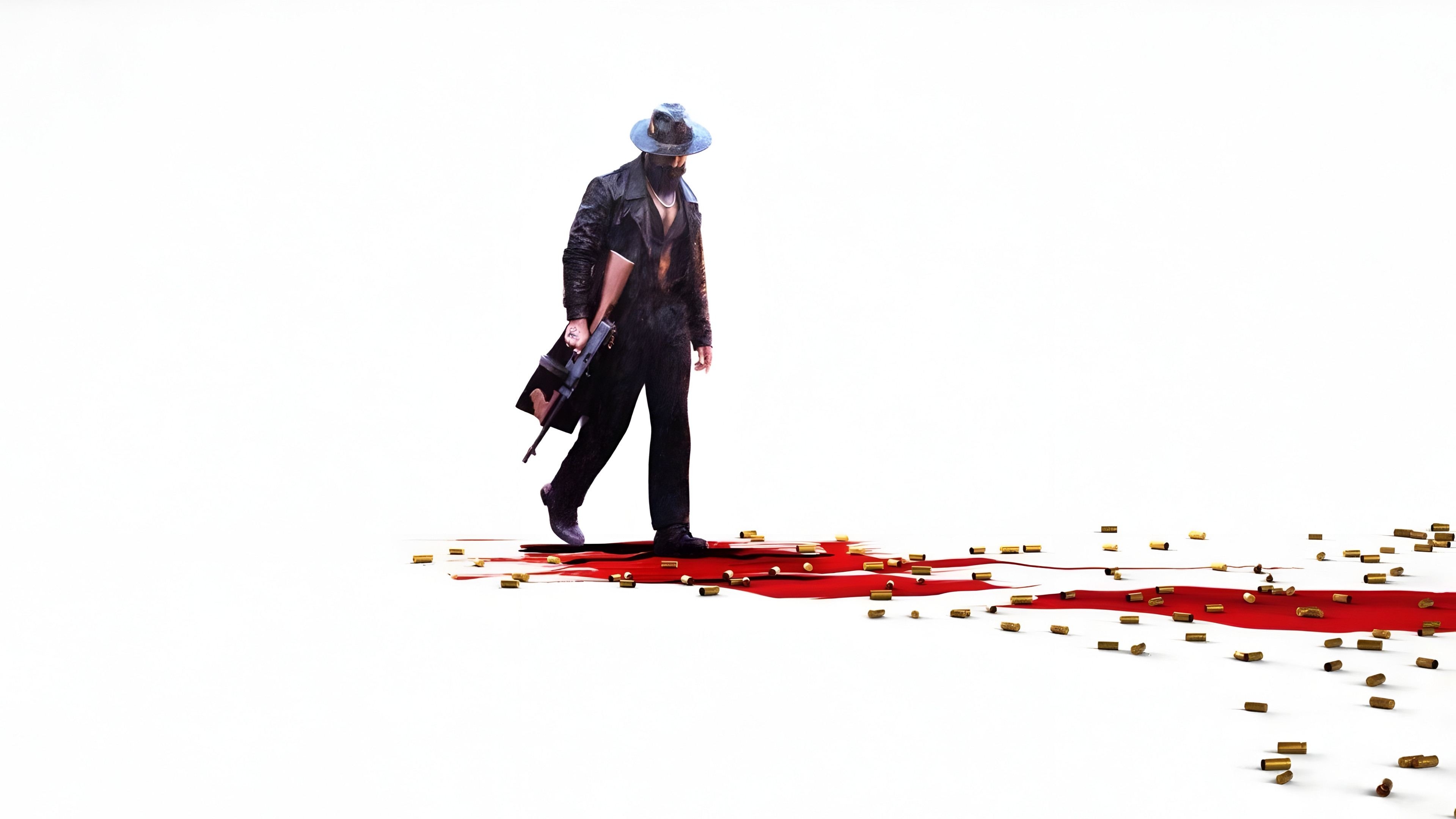
The Goan underworld of the 1970s has long functioned as cinema's most generous blank space—neon, salt air, Portuguese colonial residue, and a drug trade that predates the Andhra and Punjab epics by a full generation. Toxic understands the seduction of that lacuna and throws itself into it with a visual vocabulary so aggressively saturated that one suspects the production design team was given a Goan color wheel and told to max every channel. The 1970s setting earns its keep in the political-corruption scaffolding: the way the film threads municipal complicity and Portuguese-era institutional rot through the territorial wars gives the violence a civic architecture rather than the usual street-level anonymity. But the film's central conceit—a "ruthless but principled" enforcer who dismantles the empire he built—is so thoroughly pre-digested by the Sicario-to-KGF pipeline that Toxic mistakes its own confidence for originality. The protagonist's moral grammar is a single sentence repeated in slow motion: he is bad, he is sad, he is therefore complex. That is not a character. That is a costume rack.
The action sequences, all hyper-stylized and stretched through slow-motion to the point of near-lyrical abstraction, are where the film's ambition collides most visibly with its limitations. There is a sequence in which the protagonist walks through a burning warehouse of seized contraband that reads like a music video staged by someone who has never experienced the actual heat and smoke of a structure fire—just the idea of one, rendered in teal-and-amber contrast grade. The territorial gang wars are choreographed with a balletic detachment that flattens the political stakes the film elsewhere insists upon. If the corruption is systemic, the violence should feel systemic; Toxic wants it to feel like a single man's signature. The result is a tonal schism the editing never reconciles: we oscillate between operatic spectacle and a thriller that keeps whispering "but the system is the real villain," then immediately hands us another slow-motion knife throw to make us forget we heard it.
The betrayal at the narrative's core—supposedly the hinge that forces the protagonist to tear down his own architecture—lands with the emotional precision of a pre-written letter read aloud in a corridor. The antagonist's motivations are legible from the second act onward, which means the third act's dismantling sequences function not as revelation but as exorcism of a threat the audience already knows is hollow. What saves Toxic from total hollowness is its refusal to let the anti-hero walk away clean; the final image, whatever its specific composition, understands that a man who builds and destroys the same thing has not transcended it. He has merely changed the lock. For a film this dependent on spectacle, that single structural admission is almost generous. Almost is not enough.