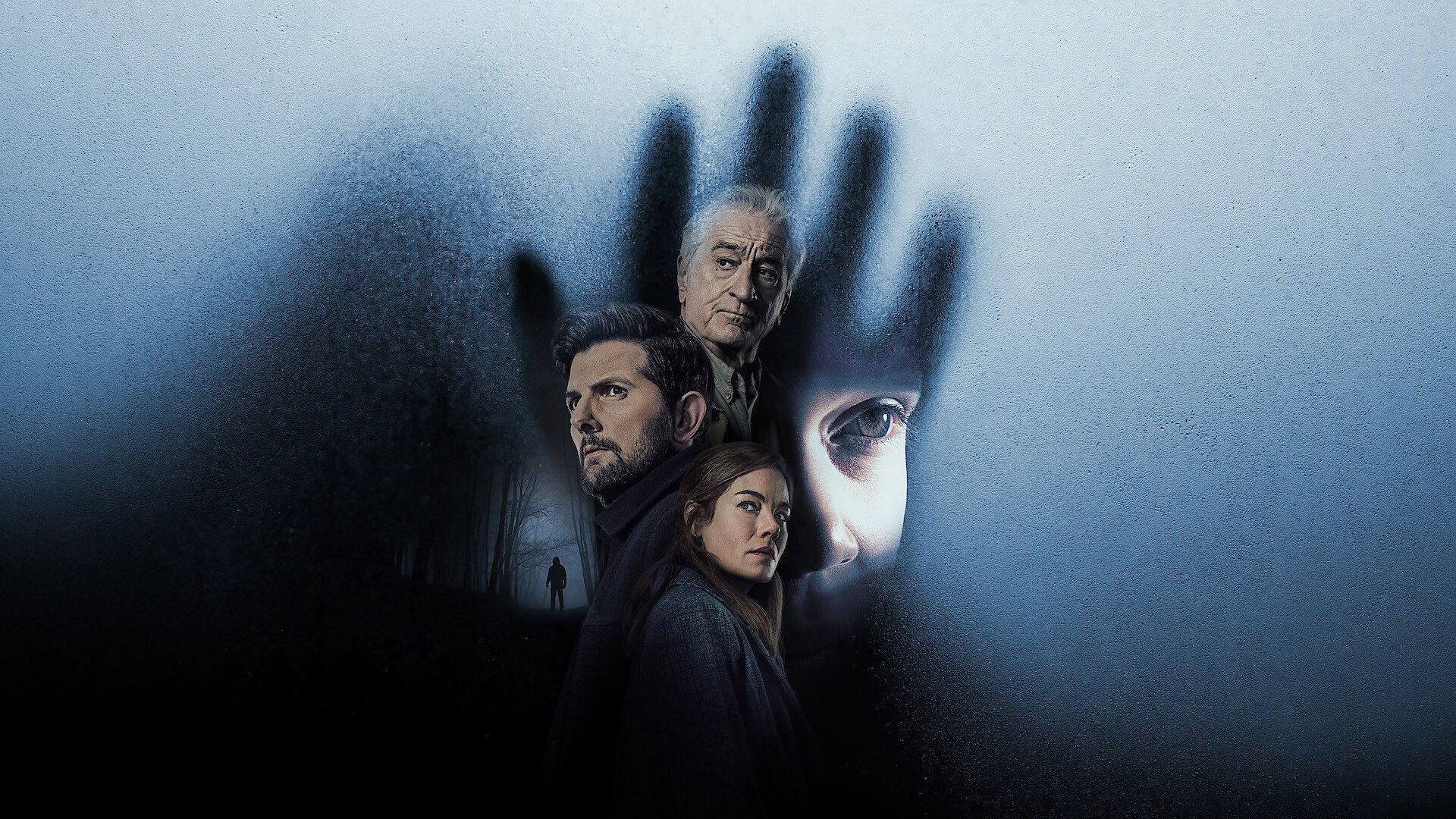
The Whisper Man is not a film that failed to land its themes. It is a film that was eviscerated in the cutting room and then stapled back together with the confidence of a surgeon who's stopped checking for a pulse. The pacing is so violently accelerated that the mystery genre's single most essential contract—causality between observation and deduction—collapses into a series of non-sequiturs. Characters pivot, confess, and reposition with the abruptness of exposition that was clearly excised from surrounding dialogue, leaving behind phantom gaps where motivation used to breathe. You do not need to be a film student to feel the phantom limbs of scenes that once existed. You simply need to be a human being who expects a thriller to explain why someone walks into a room, not merely that they did.
The cast, predictably, inherits the wreckage. Robert De Niro moves through his scenes in the particular vacancy of a man reading a script on a soundstage while his mind is elsewhere—every frame a small act of professional courtesy to the crew. Adam Scott, sensing the structural void around him, compensates by performing at the camera rather than within the frame, his eyes darting and his diction sharpening in the way an actor gestures when the architecture of a scene has been removed beneath his feet. Michelle Monaghan is, functionally, a period costume in a thriller: present, lit, and never asked to do a single thing that isn't standing in a doorway while someone else talks. Michael Keaton, by contrast, is doing the work of three people. As a jailed serial killer in a cell that the editing has reduced to a flickering afterimage, he finds interiority in stillness—subtle micro-shifts of the throat, a held gaze that does more narrative lifting than any of his co-stars' monologues. He is, frankly, the only reason a rational person might press "play."
And yet. A mystery is not a vehicle for a performance. It is a mechanism. When the mechanism is broken—when the audience cannot reconstruct the logic that should connect Scene 4 to Scene 7 because the connective tissue was fed to a timecode—no amount of Keaton's craft can perform the arithmetic the film refuses to do. The Whisper Man is not a flawed thriller. It is the ghost of a thriller, or perhaps the first thirty minutes of a six-hour television event that someone decided, at 2 a.m. on a Tuesday, to compress into a theatrical release. The result is a two-hour act of visual confusion dressed in the lighting and lensing of a prestige genre film. Keaton deserves better than this. So does the audience. So does the word "mystery." This is a stinker, and it knows it, because the editing suite does the one thing no good thriller permits: it makes the viewer an accomplice to its own incoherence.